Discover the latest insights on asthma, including innovative research, effective management strategies, and practical tips for controlling symptoms. Explore the hot topics below to help you navigate your journey toward improved asthma care and better health.
Asthma Peak Week: The Perfect Storm
What is Peak Week?
Every third week of September is considered as “Asthma Peak Week”1
Anyone with asthma should take extra precaution during the month of September1
The ED visit rates are significantly higher in September than in other months, and physician visits are also the highest in fall1
Why does it happen?
Cold and flu season beginning in early autumn2
Ragweed pollen is released in early fall3
Mold counts can increase with damper weather2
Kids going back to school (and thus more germ exposure due to close contact with their classmates)2
What can you do?
Be aware of Peak Week and monitor weather/pollen counts4
Know your triggers/symptoms 4
Review your asthma action plan4
Make sure your prescriptions are filled and inhalers are not expired4
Keep taking medications as prescribed4
Alert your emergency contacts4
Increase handwashing to stay healthy and reduce risk of infection4
Get your annual flu and COVID-19 vaccines4
Avoid exposure to triggers (such as outdoor smoke or pollution, fumes, etc)4
Asthma Disparities Among Minority Groups
Black Americans Have Worse Asthma Outcomes Than White Americans
More frequently diagnosed1
~2x likely to be hospitalized due to asthma2
~5x likely to visit the emergency department due to asthma2
~3x likely to die due to asthma, with the highest death rates in Black women1,3
Asthma Disparities Among American Indian/Alaska Native Individuals
Compared with the general population, American Indian/Alaska Natives are:
~2x more likely to experience daily asthma symptoms4,*
More likely to wake up during the night due to asthma4,*
41% more likely to die from asthma than White Americans5
American Indian/Alaska Native adults are ~66% more likely to have asthma than White adults3
Hispanic Individuals Have Worse Asthma Outcomes Than Non-Hispanic White Individuals
1.5x likely to visit the ER (older adults aged ≥ 65 years)6
More likely to have gaps in health insurance coverage (older adults aged ≥ 55 years)6
About 27% of Hispanic patients lack access to a regular healthcare
source6
Puerto Ricans, a subset of the broader Hispanic population, are:
Most affected by asthma among all racial or ethnic groups in the US6
~2x as likely to have asthma than White non-Hispanic patients (14.9% vs
7.6%)7
Over 20% of Puerto Rican children (aged 0–17 years) have had asthma at some
point8
What Factors Cause Asthma Disparities?
Economic stability and education1
Racism and discrimination1
Bias and environmental injustice1
Distrust and treatment nonadherence1
Disproportionate exposure to smoke and air pollutants1
Genetic influence on asthma susceptibility and severity1,9-11
How Do We Help Reduce Asthma Disparities?
Expand health insurance coverage and reform policies on healthcare, education, and environment1
Increase representation in trials and address any stigmas and myths and include racially and ethnically diverse researchers1
Improve patient-provider communication and provide HCP education and support programs on asthma care1
Strengthen multistakeholder partnerships, patient-family engagement, and provider-community relationships1
National Influenza Vaccination Week
What is National Influenza Vaccination Week?
National Influenza Vaccination Week occurs every year in December1
Annual influenza or “flu” vaccine can help protect against the flu1
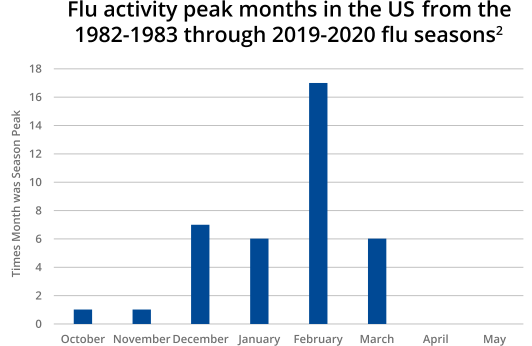
The exact timing and duration of flu seasons vary, but flu activity in North America often begins to increase in October2
Most of the time, flu activity peaks between December and February, although significant activity can last as late as May2
Who’s at risk?
People with certain chronic conditions like asthma, diabetes, and heart disease are at higher risk of developing serious flu complications3
During most flu seasons, 90% of adults who are hospitalized with flu have an underlying medical condition4
Non-Hispanic Black, non-Hispanic American Indian or Alaska Native, and Hispanic or Latino persons are at increased risk of being hospitalized with flu because they are more likely to have an underlying medical condition(s)4
What can patients with asthma do?
Anyone with asthma is at higher risk for flu-related complications, such as pneumonia. Along with everyone else, if you have asthma, you should:3
Wash your hands often with soap and water, especially after coughing or sneezing
Cover your nose and mouth with a tissue when coughing or sneezing and throw the tissue away. If you do not have a tissue, cough or sneeze into your elbow or shoulder, not your bare hands
Avoid touching your eyes, nose, or mouth (germs are spread that way)
Stay home when you are sick, except to get medical care
There’s still time to get vaccinated against the flu!
Connecting Upper and Lower Airway Diseases
The Airways as “One” – What’s the Connection?
The upper airways (nose and sinuses) and lower airways (lungs) are different parts of the body, but they work together as one system1-3
The same kinds of lining cells and immune cells are found throughout the airways1,2
Environmental triggers such as allergens, dust, smoke, and fumes interact with the airway epithelium (lining cells)
This can activate the immune cells for both upper and lower airways1,2,4,5
As the immune system reacts similarly in the upper and lower airways, problems in the nose and lungs may arise at the same time6,7
This may lead to symptoms felt throughout the whole breathing system
What is a Chronic Rhinosinusitis?
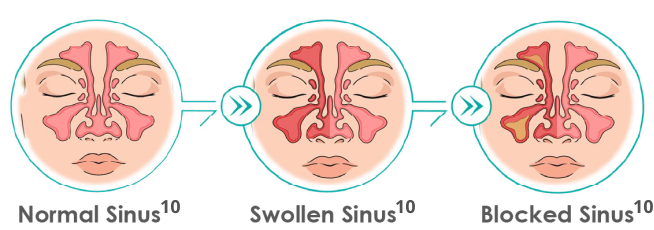
Inflammation of the inner lining of the nose and sinuses lasting more than 12 weeks and resulting in two or more nasal symptoms (eg, nasal congestion, runny nose, face pain or headache, loss of smell) that can affect your quality of life8
Affects 5%–12% of adults9
Chronic rhinosinusitis is classified into two main types based on whether nasal polyps are present or not9
Chronic rhinosinusitis with nasal polyps (CRSwNP)
Chronic rhinosinusitis without nasal polyps (CRSsNP)
Chronic Rhinosinusitis With Nasal Polyps and Asthma
Nasal polyps are soft and painless growths in the inner lining of the nose or sinuses9
These are noncancerous growths
Affect 20%–30% of patients with chronic rhinosinusitis
People with asthma have a greater chance of having nasal polyps5
About 67% of people with CRSwNP also have asthma, showing that the two conditions often occur together6
Asthma and Other Chronic Lower Respiratory Diseases
Chronic lower respiratory disease is the fifth leading cause of death in the United States11
The most common chronic lower respiratory diseases are asthma and COPD11
Asthma and COPD are different conditions, but they share many of the same symptoms, including shortness of breath, wheezing, coughing, and excess mucus, which can make it difficult to tell them apart12
About 15%–55% of people may have symptoms of both asthma and COPD13
Smokers are at an increased risk of having both asthma and COPD14